
Our Research
Health Policy
Our center investigates how health policies shape population health outcomes, with a focus on access, equity, and preventable mortality. We use modeling to anticipate the real-world consequences of legislation and administrative decisions—from Medicaid work requirements and federal budget proposals to insurance coverage of novel therapies. By quantifying the human impact of policy, we provide evidence that informs debates, highlights trade-offs, and guides decision-makers toward strategies that protect and improve public health.
Recent Works

Medicaid Work Requirements Could Cost Thousands of Lives
Our modeling shows that imposing nationwide Medicaid work requirements would significantly increase mortality—potentially resulting in thousands of preventable deaths by reducing access to essential health coverage .

Broader Access to Weight-Loss Drugs Could Transform Population Health
Our projections show that compared to current uptake, expanding access to GLP-1 and similar weight-loss medications across the U.S. would substantially reduce cardiovascular disease, diabetes complications, and obesity-related morbidity—improving both life expectancy and quality of life.
Medicare for All: Better Care at Lower Cost
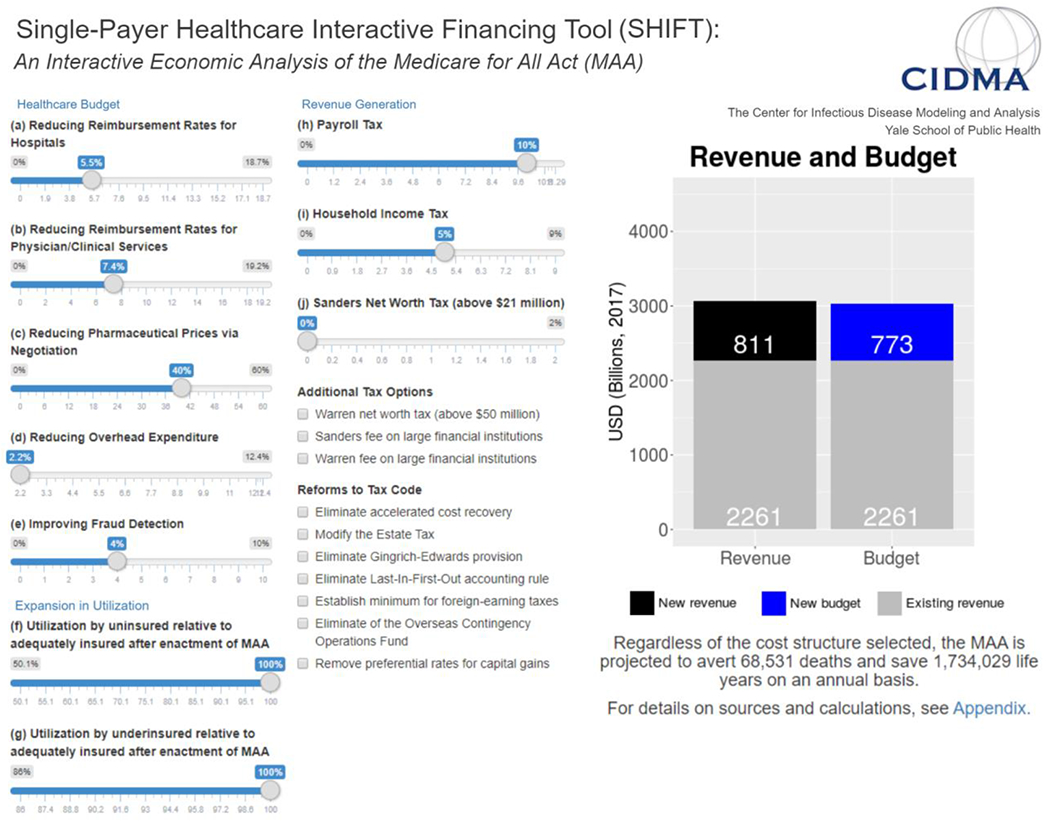
Our modeling shows that compared to the current U.S. healthcare system, adopting a universal single-payer plan would reduce national health expenditure by about 13% (over $450 billion annually), while saving more than 68,000 lives and 1.7 million life-years each year—demonstrating that universal coverage can achieve both cost savings and major health gains